Product Description
We are a big name that deals in the manufacturing of a high-performance Zero Liquid Discharge Evaporator Plant that is designed and developed by our team of highly skilled professionals by using advanced technologies that result in high robustness and efficiency. It is commonly used in industries such as wastewater treatment plants, chemical processing industries, and many others. The offered evaporation plant requires a standard alternating voltage of 440 volts with a frequency of 50 to 60 Hertz. Zero Liquid Discharge Evaporator Plant designed by us is highly demanding due to their high robustness, efficiency, and low power consumption.
Advanced Automation for Precision ControlOur Zero Liquid Discharge Evaporator Plant employs a modern PLC control system, automating the entire process to minimize manual intervention. This enhances operational reliability and delivers consistent performance. The system monitors and adjusts parameters in real time, ensuring precision and efficiency during wastewater treatment.
Durable Stainless Steel ConstructionConstructed from premium stainless steel, the ZLD Evaporator Plant is engineered for durability and resistance to corrosion. This superior build quality extends service life and supports continuous operation in demanding industrial environments, delivering value and reducing long-term maintenance needs.
Sustainable Water Management SolutionDesigned to comply with stringent environmental standards, our ZLD plant transforms hazardous liquid waste into solid residues, eliminating liquid discharge. This process not only supports regulatory compliance but also conserves water, promoting sustainable industrial operations for manufacturers and exporters.
FAQs of Zero Liquid Discharge Evaporator Plant:
Q: How does the Zero Liquid Discharge Evaporator Plant operate?
A: The ZLD Evaporator Plant uses a PLC-controlled system to automate the evaporation process. Wastewater is heated within the stainless steel unit, allowing water to evaporate while separating contaminants. The treated water vapor can be condensed and reused, while solid residues are collected for safe disposal, ensuring zero liquid effluent discharge.
Q: What materials are used in the construction of the ZLD Evaporator Plant?
A: The plant is constructed primarily from high-grade stainless steel, selected for its durability, corrosion resistance, and ability to withstand varied industrial conditions. This ensures long-term reliability and minimal maintenance requirements.
Q: When should industries consider implementing a Zero Liquid Discharge system?
A: Industries should consider installing a ZLD system when facing strict environmental discharge regulations, experiencing water scarcity, or seeking to enhance sustainable practices. This system is particularly beneficial for sectors where wastewater generation is significant and compliance with effluent norms is mandatory.
Q: Where is the ZLD Evaporator Plant commonly used?
A: The plant is widely adopted in various Indian industries such as textiles, pharmaceuticals, chemicals, and power plants. Its robust design and automation make it suitable for any facility handling large volumes of industrial wastewater.
Q: What is the process involved in zero liquid discharge using this evaporator plant?
A: The process includes feeding the contaminated liquid into the plant, where its subjected to controlled heating. The water content evaporates, after which it is condensed and recovered. The non-volatile impurities remain and are removed as solid residues, resulting in no liquid waste discharge.
Q: How does PLC control benefit the operation of the ZLD plant?
A: PLC control enables automation of all critical plant operations, enhancing accuracy, safety, and energy efficiency. It ensures that process parameters are monitored and maintained within optimal ranges, reduces human error, and supports real-time adjustments for stable operation.
Q: What are the key benefits of using an automatic ZLD Evaporator Plant?
A: The key benefits include complete elimination of liquid waste, regulatory compliance, water recovery for reuse, reduced environmental impact, and low operational costs due to automated, energy-efficient processes.
 Ahmedabad, Gujarat, India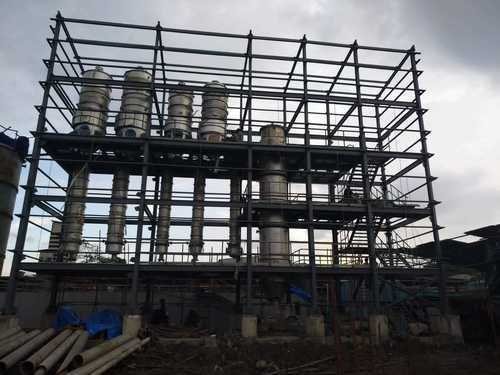






 Send Inquiry
 Send Inquiry
 Send SMS
 Call Me Free


 English
 Spanish
 French
 German
 Italian
 Chinese (Simplified)
 Japanese
 Korean
 Arabic
 Portuguese